A parklet problemlet?

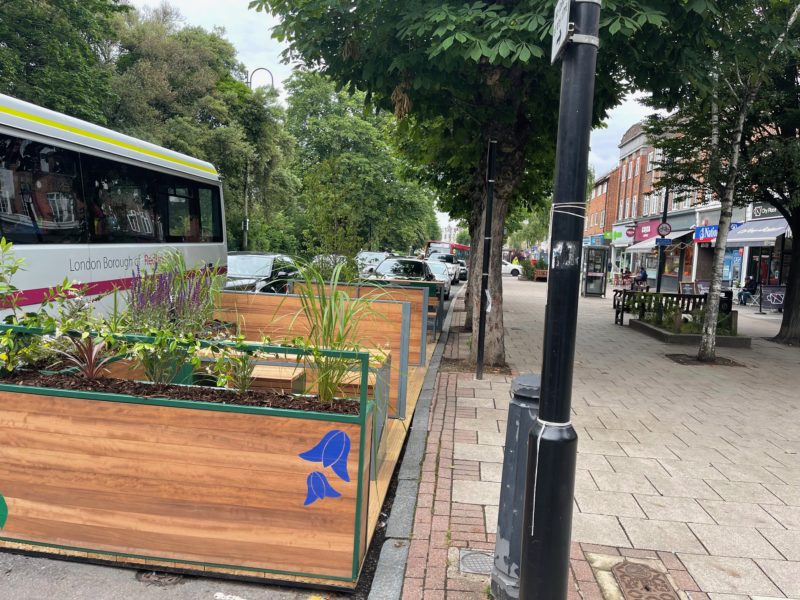
We love new things, and despite all the naysaying, we’re rather keen on the Wanstead Parklet (aka the Wanstead Village Hub), now in full service outside the Co-op.

Along with the new flower baskets adorning the railings at the side of the road outside the Corner House, it all feels fresh and summery. Other views may be available.

We have three observations about the experience of sitting in the parklet enjoying a cup of coffee – one good, one bad, and one kind of neutral.

  1. One is that this innovation could increase the number of casual encounters between acquaintances, and that’s a great thing.
  2. Second is that you are, as you sit, unfortunately very close to the traffic – something which doesn’t apply to the corresponding parklet in South Woodford, as that part of George Lane is not a main thoroughfare.
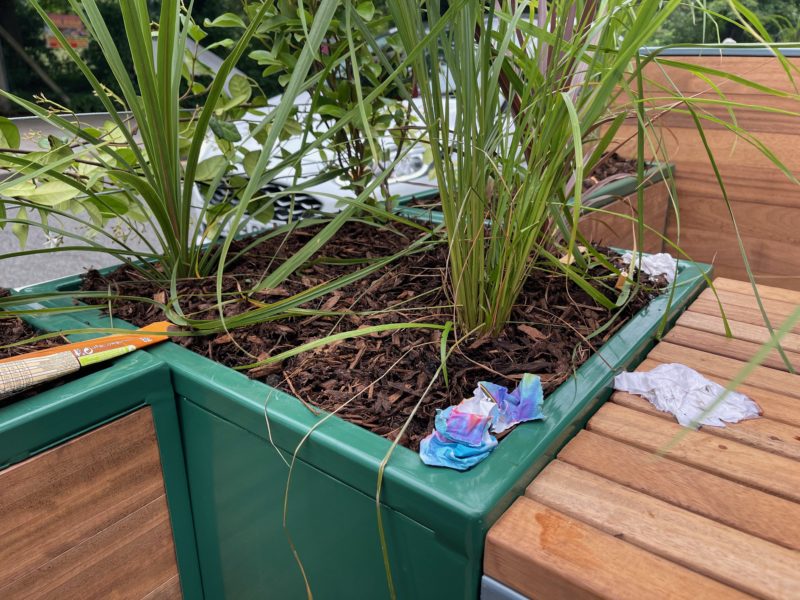
  3. Third is that to fulfil its promise, this is going to have to be kept clean. No one wants to sit at a manky table with other people’s detritus. Feels like we might be heading for an illustration of the tragedy of the commons.

New book tells story of Wanstead people’s role in green movement

A new book tells the remarkable story of the role ordinary people living in and around Wanstead had in getting public access to open spaces and also helping to create the idea of environmental protest.

Saving the People’s Forest by Mark Gorman, which has just been published, is marking the 150th anniversary of the protests, which happens next month.

The book’s publishers say:

150 years ago, on 8th July 1871, thousands of people gathered in Epping Forest to mount a protest. A campaign was in full swing – a campaign that renowned ecologist Oliver Rackham has dubbed “the origin of the modern British environmental movement.”

This campaign, to preserve Epping Forest and other commons for public use in the face of unchecked housing development across London, had its watershed moment that day. The crowd gathered to protest the illegal enclosure of Wanstead Flats, at the southern end of the forest, by a local landowner. But the demonstration started a popular campaign which contributed significantly to a change in the law – the Epping Forest Act of 1878 – which was the first legal declaration of the public’s right to use an open space in Britain for leisure.

The story of the demonstration, set within the wider context of the campaign to preserve the London commons, is told in a new book by local historian and environmentalist Mark Gorman. Saving the People’s Forest: Open spaces, enclosure and popular protest in mid-Victorian London sheds new light on the dynamics of the campaign, focussing not on the metropolitan upper middle class players most often credited with its success, but instead on the proletarian grass roots movement whose popular protests would steer the campaign towards its successful conclusion.

The book is published by University of Hertfordshire Press, and is now available from Wanstead Bookshop, below, priced £16.99

Wes Streeting announces cancer diagnosis

Wansteadium sends its best wishes to Ilford North MP Wes Streeting, who has announced he has been diagnosed with kidney cancer. His statement came in a tweet, below. Wes’s constituency includes much of the Nightingale Estate south of Hermon Hill/Chigwell Road.

Wanstead Post Office attempted robber jailed

Steven Ifield holding a folded walking stick intending it to look like a shotgun Photograph: Metropolitan Police

A man who attempted to rob Wanstead Post Office while pretending to be carrying a gun has been jailed for 16 years. Steven Ifield, 52, of Hornchurch was refused by staff at the post office who told him the till was on a time lock.

He was sentenced at Snaresbrook Crown Court last week. The Metropolitan Police have issued this press release:

An armed robber who targeted two banks and a post office in Redbridge has been jailed.

Steven Ifield, 52 (08.02.69) of Park Lane, Hornchurch appeared at Snaresbrook Crown Court on Friday, 30 April. He was sentenced to 16 years’ imprisonment.

Following a two week trial at the same court in January, Ifield was found guilty of two counts of robbery, one count of attempted robbery and three counts of possession of an imitation firearm.

Between 7 October and 7 November 2019, Ifield targeted two banks and a post office in Gants Hill and Wanstead.

On two occasions he produced what police believe to have been an imitation handgun but which to staff, appeared genuine.

On the third occasion, he used a folded walking stick half concealed inside a carrier bag and held it as if he was carrying a shotgun.

He pointed the imitation weapons at staff, demanding that they give him money.

At the banks, Ifield managed to steal cash and stuffed it into his coat before fleeing. He made off with £3,230 from one raid and £1,360 from the other.

His attempt to rob the post office was foiled when staff refused to open the till, telling him it was on a time lock. 

Detectives identified Ifield after tracing the route he took as he fled the scene of each robbery.

By examining extensive CCTV from buses, shops and tube stations, they were able to follow his movements and place him at all three venues at the times the raids took place.

PC Stefen Rule, from the Met’s Flying Squad, said: “Ifield has a long and serious offending history, including nine previous armed robberies. Each one will have caused a huge amount of distress to the innocent members of staff who were targeted.

“I am pleased that he will no longer be able to pose a threat to the public. I hope that these convictions and the length of the sentence imposed by the court will be of some comfort to the victims and help alleviate the trauma they have experienced.”