A new book tells the remarkable story of the role ordinary people living in and around Wanstead had in getting public access to open spaces and also helping to create the idea of environmental protest.
Saving the People’s Forest by Mark Gorman, which has just been published, is marking the 150th anniversary of the protests, which happens next month.
The book’s publishers say:
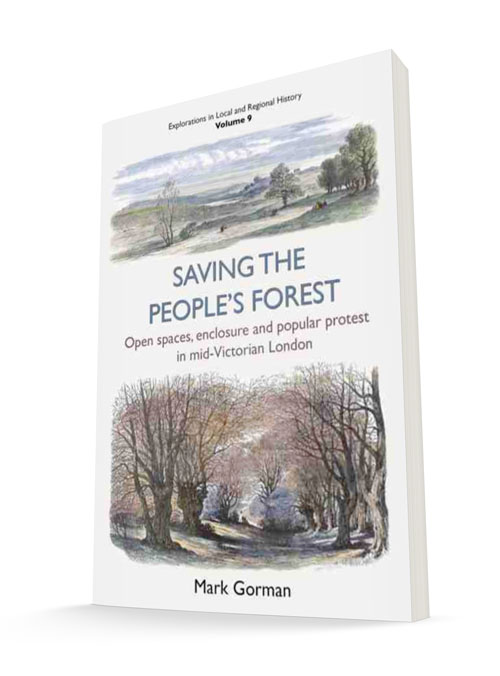
150 years ago, on 8th July 1871, thousands of people gathered in Epping Forest to mount a protest. A campaign was in full swing – a campaign that renowned ecologist Oliver Rackham has dubbed “the origin of the modern British environmental movement.”
This campaign, to preserve Epping Forest and other commons for public use in the face of unchecked housing development across London, had its watershed moment that day. The crowd gathered to protest the illegal enclosure of Wanstead Flats, at the southern end of the forest, by a local landowner. But the demonstration started a popular campaign which contributed significantly to a change in the law – the Epping Forest Act of 1878 – which was the first legal declaration of the public’s right to use an open space in Britain for leisure.
The story of the demonstration, set within the wider context of the campaign to preserve the London commons, is told in a new book by local historian and environmentalist Mark Gorman. Saving the People’s Forest: Open spaces, enclosure and popular protest in mid-Victorian London sheds new light on the dynamics of the campaign, focussing not on the metropolitan upper middle class players most often credited with its success, but instead on the proletarian grass roots movement whose popular protests would steer the campaign towards its successful conclusion.
The book is published by University of Hertfordshire Press, and is now available from Wanstead Bookshop, below, priced £16.99